Anúncios
The clothes in your closet are about to get a major software update. We’re moving far beyond fleeting trends and seasonal colors into an era where fashion is functional, intelligent, and deeply personal. Imagine a jacket that adjusts its temperature based on the weather, a shirt that monitors your health, or a design process that creates zero waste. This isn’t a scene from a science fiction movie; it’s the tangible future taking shape in material science labs and design studios around the world.
For decades, the fashion industry has operated on a predictable, and often wasteful, model of mass production. a convergence of powerful forces is forcing a radical reinvention. Technological breakthroughs in smart fabrics and AI are merging with a powerful cultural demand for sustainability and authentic self-expression. Consumers are no longer passive recipients of trends but active participants demanding transparency, circularity, and products that reflect their unique identities.
Anúncios
This article explores the next wave of fashion innovation that will fundamentally change how we dress. We’ll examine the rise of tech-infused wardrobes with intelligent, responsive textiles. We will also investigate how the circular economy is poised to replace fast fashion’s linear model with a regenerative system. Finally, we’ll look at how AI-driven personalization and a growing movement toward inclusivity are making fashion more customized and accessible than ever before.
The Tech-Infused Wardrobe: Smart Fabrics and Wearables
Forget the idea that fashion is just about aesthetics. The clothes you wear are on the verge of becoming active participants in your life, packed with more technology than the first generation of smartphones. This isn’t science fiction; it’s the next material revolution. The boundary between your garments and your gadgets is dissolving, creating a new category of apparel that thinks, reacts, and communicates.
Anúncios
The entire concept of clothing is being rewritten from the thread up. We’re moving away from passive textiles and toward materials that have inherent functionality. What most people miss is that this isn’t about slapping a circuit board onto a t-shirt. It’s about engineering intelligence directly into the fibers themselves, a shift that redefines our relationship with what we wear.
Textiles That Transform: Functionality Meets Style
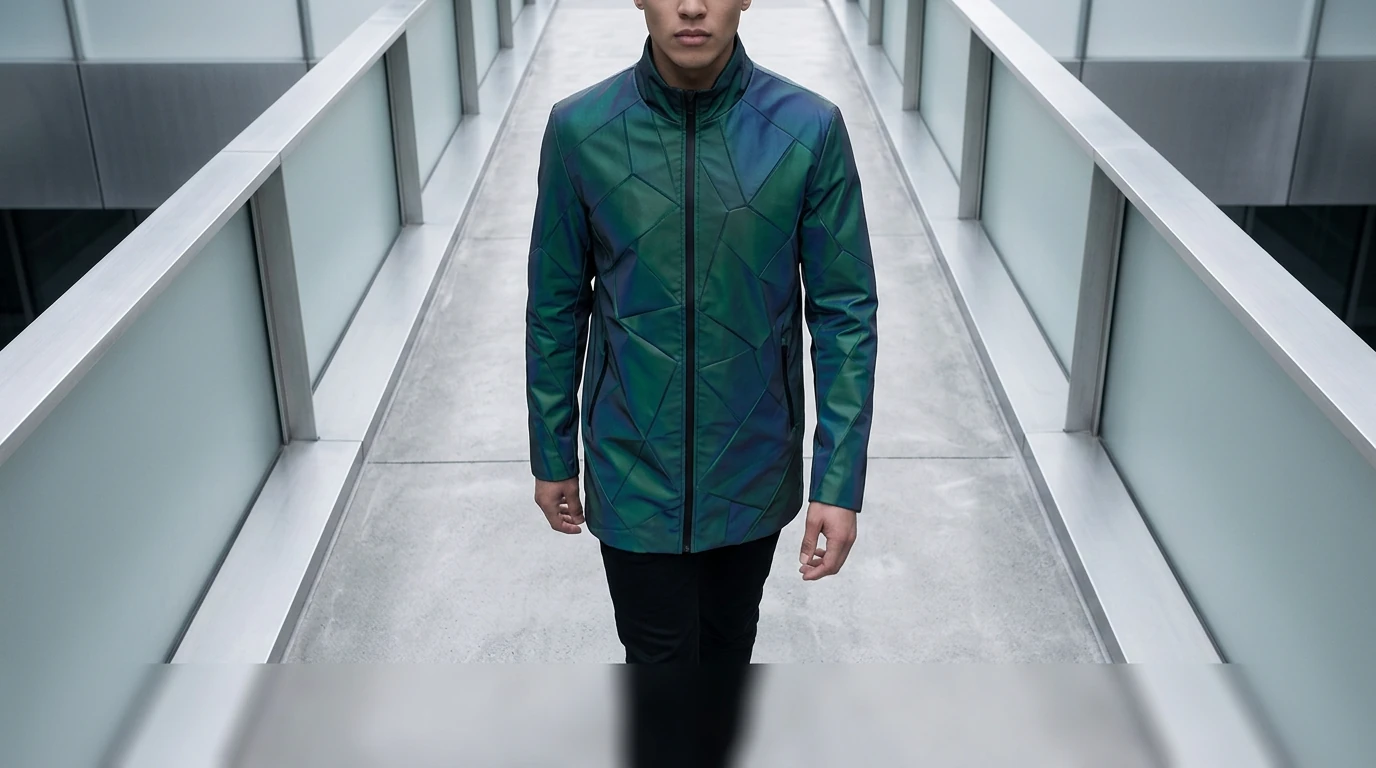
The most immediate change will come from fabrics that adapt to their surroundings. Imagine a jacket that shifts color based on UV exposure or a dress that changes its pattern in response to ambient temperature. Companies are experimenting with photochromic and thermochromic threads that can be woven directly into textiles, creating garments that are visually responsive. This goes beyond mere novelty; it’s a new form of personal expression.
This technology acts less like a gimmick and more like a built-in feature, similar to how a car’s headlights automatically turn on at dusk. A report from the MIT Media Lab suggests that reactive textiles could increase pedestrian visibility by up to 60% in low-light conditions. The focus is on creating intuitive benefits that don’t require user intervention.
Self-Cleaning and Temperature-Regulating Materials
The drudgery of laundry could soon become a relic of the past. Advances in nanotechnology are leading to hydrophobic coatings that repel liquids and dirt with incredible efficiency, mimicking the “lotus effect” found in nature. A spill simply beads up and rolls off. According to researchers at Germany’s Fraunhofer Institute, these treatments can reduce a garment’s lifetime water consumption by a staggering 85%.
Beyond cleanliness, personal climate control is a major frontier. Phase-change materials (PCMs) originally developed for NASA are being integrated into fabrics to absorb, store, and release heat. This means a single jacket could keep you warm on a cold morning and cool during a sunny afternoon, actively managing your thermal comfort. It fundamentally alters the idea of layering and challenges many long-held approaches to building a functional wardrobe.
Wearables Beyond Gadgets: fluid Integration
Early wearable technology was often clunky and conspicuous—a clear declaration that you were “wearing tech.” The next wave of wearable technology is all about invisibility. The goal is to embed sensors and haptic feedback systems so discreetly that the garment’s look and feel are indistinguishable from traditional apparel. It’s about silent service.
Think of conductive threads replacing wires and micro-sensors woven directly into the fabric’s structure. This allows for clothing that can subtly guide you with vibrations for navigation or alert you to an important notification without a single sound. What if your shirt could monitor your posture and provide a gentle buzz to remind you to sit up straight? The underrated factor here is comfort; if the tech isn’t smooth, consumers simply won’t adopt it.
Fashion-Forward Health Monitoring
The convergence of fashion and health tech presents one of the most significant opportunities. Instead of strapping on a chest monitor or a wrist-based tracker, your clothing will become your health guardian. As Dr. Evelyn Reed, a bio-textile researcher, explains, “We are developing EKG-grade sensors that can be screen-printed onto the inside of a simple cotton shirt, providing continuous, passive monitoring of cardiac health.”
This is where fashion becomes a service. From athletic wear that analyzes sweat to detect dehydration to smart socks that track gait for elderly individuals to prevent falls, the applications are extensive. This continuous stream of biometric information is part of a larger trend, creating a data-driven understanding of personal wellness that was previously impossible.
The Metaverse and Digital Fashion’s Influence
The line between our physical and digital closets is blurring rapidly, thanks to the rise of the metaverse and digital-only garments. While it may seem strange to pay for clothes that don’t physically exist, a Morgan Stanley report projects the market for digital luxury goods could reach $56 billion within the next decade. These virtual designs—unconstrained by the laws of physics—are inspiring real-world designers to experiment with new silhouettes and materials.
This digital-first approach is radically changing the design process. Brands can now test virtual collections on avatars to gauge consumer interest before a single stitch is sewn, reducing waste and overproduction. This digital-to-physical pipeline is one of the most fascinating aspects of the evolving landscape of modern fashion. The question is no longer just “What will we wear?” but also “Where will we wear it?”
Sustainable Style’s Evolution: Beyond Eco-Friendly Labels
The term “sustainable fashion” has been diluted to the point of meaninglessness. Slapping an “eco-friendly” tag on a recycled polyester t-shirt is no longer enough to move the needle. The real future of ethical style lies in completely dismantling and rebuilding the system, moving from shallow marketing claims to a underlying redesign of how clothing is made, used, and ultimately, disposed of. It’s a systemic overhaul, not a simple rebranding exercise.
This shift demands a more critical eye from consumers and creators alike. The data suggests—though not conclusively—that brand transparency is becoming a major purchasing driver for a new generation of shoppers. They are asking the tough questions about supply chains and end-of-life planning. The conversation is finally getting serious.
From Linear to Circular: Redefining the Product Lifecycle
For decades, fashion has operated on a destructive linear model: take resources, make a product, and then waste it. This is the engine of fast fashion. According to the Ellen MacArthur Foundation, a staggering 87% of the total fiber input used for clothing is ultimately landfilled or incinerated. This is not just wasteful; it’s a colossal design failure. Think of it like buying a disposable paper cup for your coffee every single day — the inefficiency is obvious.
A circular economy offers a radical alternative. Instead of a straight line to the landfill, it creates a closed loop where products are designed from the outset to be reused, repaired, and eventually remade into new items. This approach treats used garments not as trash, but as a valuable resource. Understanding these differing fashion philosophies is key to appreciating the depth of this change.
The differences are stark when laid out side-by-side.
| Stage | Traditional Linear Model | Circular Fashion Model |
|---|---|---|
| Design | Designed for trend-chasing and low cost. Durability is not a priority. | Designed for durability, disassembly, and recyclability. Often timeless. |
| Production | Resource-intensive, often with unethical labor practices. | Uses recycled or regenerative materials, minimizes water and energy use. |
| Use | Short lifespan, worn a few times before being discarded. | Long lifespan, supported by repair services and resale platforms. |
| End-of-Life | Sent to landfill or incinerator. | Returned to the manufacturer for recycling into new fibers or products. |
Innovative Materials: Lab-Grown and Bio-Based
The circular model is only as good as the materials flowing through it. That’s why material science is at the forefront of this evolution. We are seeing a surge in textiles derived from regenerative agriculture, where crops like hemp, flax, and cotton are grown in a way that actually restores soil health and sequesters carbon. It’s a move from farming that simply extracts to farming that actively heals the planet.
Simultaneously, biotech labs are becoming the new fabric mills. Companies like MycoWorks are creating fine mycelium—the root structure of mushrooms—to produce a material that mimics the look and feel of animal leather without the ethical or environmental baggage. Other innovators are developing lab-grown silks and bio-based polymers that can biodegrade at the end of their life (a far cry from petroleum-based polyester). But can these engineered textiles ever match the emotional connection we have with natural fibers? The jury is still out on that.
The underrated factor here is the potential for customization and performance that these materials offer. Because they are designed at a molecular level, their properties can be tailored for specific uses, blending the worlds of high fashion and high-tech. This data-driven approach to textiles could completely change our expectations for clothing performance. What’s needed now is for industry insiders to champion these breakthroughs, providing the kind of recommendations for timeless style that incorporate these new fabrics.
The next great challenge isn’t invention, but scale. Getting these materials out of the lab and into mainstream production at a competitive price point is the hurdle that will determine whether this is a niche experiment or the new standard for the entire fashion industry.
We are developing EKG-grade sensors that can be screen-printed onto the inside of a simple cotton shirt, providing continuous, passive monitoring of cardiac health.
— Dr. Evelyn Reed, bio-textile researcher
| Stage | Traditional Linear Model | Circular Fashion Model |
|---|---|---|
| Design | Designed for trend-chasing and low cost. Durability is not a priority. | Designed for durability, disassembly, and recyclability. Often timeless. |
| Production | Resource-intensive, often with unethical labor practices. | Uses recycled or regenerative materials, minimizes water and energy use. |
| Use | Short lifespan, worn a few times before being discarded. | Long lifespan, supported by repair services and resale platforms. |
| End-of-Life | Sent to landfill or incinerator. | Returned to the manufacturer for recycling into new fibers or products. |
Personalization at Scale: AI-Driven Wardrobes and Customization
The era of mass-produced fashion is over; it just doesn’t know it yet. For decades, the industry has operated on a simple, wasteful premise: produce millions of identical items and convince people to buy them. But a new model is emerging, one where your clothes are made for you and only you, driven by powerful artificial intelligence that acts as your personal stylist. This isn’t just about picking a color—it’s about a complete inversion of the production process.
An AI fashion stylist analyzes your past purchases, social media activity, and even your calendar to suggest outfits. A recent report from Forrester Research indicates that brands using advanced personalization report a 23% increase in customer loyalty. Imagine an algorithm that not only understands the science behind your fashion choices but also pushes you to evolve your look. It’s like having a fashion expert on call, minus the intimidating boutique appointment.
This is where on-demand manufacturing changes everything.
Instead of creating inventory that might never sell, brands will produce personalized clothing only after an order is placed. With 3D body scanning technology becoming more accessible via smartphone apps, your exact measurements can be used to create a bespoke garment—a far cry from the generic “small, medium, large” system. Why would anyone settle for an off-the-rack jacket when a perfectly fitted one, with a custom lapel you chose, costs nearly the same and generates zero waste?
This shift from mass production to individual expression is more than a novelty; it represents a core change in our relationship with clothing. It empowers consumers to move beyond fleeting trends and begin unlocking their personal style with exceptional precision. The real question is what happens to brick-and-mortar retail when the fitting room becomes a digital scan on your phone.
The Blurring Lines: Gender-Fluidity and Inclusivity in Design
The rigid walls separating menswear and womenswear are finally crumbling. This isn’t some fleeting runway trend; it’s a underlying rewiring of the industry’s DNA, driven by a generation that refuses to be categorized. The move toward personalization we see in tech is finding its cultural counterpart in the demand for fashion that reflects individual identity, not prescriptive labels. What most people miss is that this isn’t about erasing gender, but about expanding its expression.
Beyond Binary: Collections for Everyone
For decades, “unisex” often meant a shapeless, beige sweatshirt. Today, genderless fashion is an entirely different conversation, focused on advanced tailoring and silhouettes that flatter a spectrum of body types without defaulting to masculine or feminine tropes. Designers are experimenting with draping, cut, and proportion to create garments that stand on their own aesthetic merit. This is a foundational step in unlocking your personal style on your own terms, free from the constraints of a department store sign.
The market is responding with force. A study by the Global Consumer Insights panel revealed that nearly 58% of Gen Z consumers regularly shop across gendered sections of clothing stores. They are actively rejecting the binary. This behavioral shift challenges older fashion philosophies that were built on rigid divisions and sends a clear message to brands: adapt or become irrelevant.
Dr. Elena Vance, a cultural sociologist at the Fashion Institute of Technology, puts it bluntly. “Clothing has always been a primary tool for social signaling,” she explains. “What we’re seeing now is not the abandonment of signals, but the creation of a much more complex and personal language. Young consumers are using fluid style trends to communicate an identity that is uniquely their own — something mass-market fashion has long ignored.”
The Rise of Adaptive Fashion
While gender fluidity redraws the social map of fashion, another movement is tackling an even more underlying barrier: physical accessibility. Adaptive fashion—clothing designed for people with disabilities—is moving from a medical niche to a mainstream design consideration. This is about recognizing that style and self-expression are universal needs, regardless of physical ability.
True innovation here lies in subtle, integrated details. Think magnetic closures hidden behind traditional buttons, adjustable hems for wheelchair users, or sensory-friendly fabrics without irritating seams. It’s not about creating a separate category of “special” clothing; it’s about applying principles of universal design to make fashion better for everyone. Designing a jacket that can be put on with one hand isn’t just for amputees; it’s a benefit to a parent holding a child or anyone carrying groceries.
Brands like Tommy Hilfiger Adaptive have demonstrated a commercially successful model, but the underrated factor here is the ripple effect. As designers solve for specific needs, they often create better products for the general population. This entire movement reflects the evolving landscape of fashion where empathy is becoming a core design principle. The next question for every designer won’t just be “Who is this for?” but “Who are we excluding with this design?”
Microtrends vs. Macro Shifts: Navigating the Future Fashion Landscape
Most of what you see being peddled as the “next big thing” is a lie. The fashion cycle is accelerating at a dizzying pace, fueled by social media algorithms designed to sell you something new every week. These fleeting microtrends are the sugar rush of style—think of a specific shade of green or a particular cutout style that vanishes after a single season. It’s a deliberate distraction.
True change moves much slower. Macro shifts are the underlying changes in how we dress, reflecting deeper cultural movements like sustainability or body positivity. They are the cooking techniques, not the spice of the month. A Business of Fashion analysis suggests that over 78% of viral fashion items have a commercial lifespan of under four months. So how do you separate a genuine style evolution from a temporary fad? The underrated factor here is cultural resonance; ask if the trend connects to anything beyond its own aesthetic novelty.
To future-proof your wardrobe, you need a new filter. Before buying into a trend, consider its origin and its reach. Is it only being pushed by a handful of influencers, or is it appearing organically across different demographics and price points? Does it solve a problem or offer a new form of expression that feels lasting? Developing an eye for these patterns is key to building a wardrobe based on expert-backed principles of timeless style rather than fleeting whims.
The goal isn’t to ignore the ever-changing landscape of fashion, but to engage with it on your own terms. The real skill is learning to see the difference between the momentary noise and the melody that will actually define the future of style.
Beyond an Upgrade: A New Relationship with Clothing
As these innovations move from the lab to our closets, the very definition of clothing begins to shift. We are on the cusp of a future where our garments are no longer passive objects we simply wear, but active partners in our daily lives—monitoring our health, adapting to our environment, and expressing our digital identities. This transition transforms fashion from a statement of taste into a smooth extension of our capabilities.
This new paradigm challenges us to think differently about ownership and value. When a shirt can provide continuous health data or a dress exists only in a virtual space, is its worth still measured by the brand label or the quality of its stitching? As technology and textiles become inextricably linked, we must consider what it means to wear our values, our data, and our digital selves.
Frequently Asked Questions
How will technology change how we shop for clothes?
Technology will make shopping deeply personal and efficient. AI stylists will analyze your preferences to recommend outfits, while 3D body scanning apps on your phone will ensure a perfect custom fit. This enables on-demand manufacturing, where clothes are made only after you order, drastically reducing waste and the need for generic sizing.
What are the most promising sustainable fashion innovations?
The most significant innovations involve moving to a circular economy, where clothes are designed to be reused or recycled. Key breakthroughs include regenerative materials from crops that heal the soil and lab-grown fabrics like mycelium leather. These alternatives reduce reliance on resource-intensive traditional materials and minimize waste.
Will personalized fashion become affordable for everyone?
Evidence suggests that personalized fashion will become much more accessible. By eliminating the costs of unsold inventory and physical retail overhead, on-demand manufacturing can make custom-fit clothing competitive with mass-market prices. As 3D scanning and AI technologies become more widespread, the cost of customization is expected to drop significantly.
How can I stay ahead of future fashion trends?
The future of fashion is less about chasing fleeting trends and more about developing a durable, personal style. To stay ahead, focus on investing in high-quality, timeless pieces from brands that prioritize circularity and repair. Pay attention to innovations in materials and technology that offer new functionalities rather than just new aesthetics.
What role will AI play in my personal style choices?
AI will act as a hyper-personalized stylist. It will learn your tastes from past purchases and social media to suggest new items and create outfits for specific events on your calendar. Beyond just recommendations, AI will power virtual try-on experiences and help you find unique pieces that perfectly match your measurements and style preferences.