Anúncios
Tired of fast fashion cycles and craving a wardrobe that reflects your unique style? Imagine transforming forgotten treasures into statement pieces that turn heads and tell a story. Vintage fashion upcycling isn’t just a craft; it’s a creative revolution, offering a sustainable path to a wardrobe filled with individuality and character. This movement is gaining momentum as more people discover the joy and satisfaction of giving old garments a new lease on life.
The fashion industry’s environmental impact is undeniable, with millions of tons of textiles ending up in landfills annually. Upcycling directly combats this waste, diverting perfectly usable materials from contributing to pollution. Beyond its ecological benefits, it fosters a deeper connection to clothing, encouraging mindful consumption over fleeting trends. It’s about seeing potential where others see only wear and tear, and transforming that vision into tangible, wearable art.
Anúncios
This guide will equip you with everything you need to embark on your upcycling journey. We’ll explore necessary tools and techniques, from basic alterations to advanced reconstruction methods, ensuring your creations look professional and polished. Dive into emerging trends like deconstruction, artful embellishments, and patchwork, and discover inspiring before-and-after ideas for common vintage finds like denim jackets and silk scarves. Get ready to unlock your creativity and redefine your style with sustainable, one-of-a-kind pieces.
The Upcycling Revolution: Why Vintage is Now Voguish
Who needs fast fashion when you can resurrect style? The current surge in vintage fashion upcycling isn’t just a trend; it’s a quiet rebellion against disposable wardrobes, transforming old garments into contemporary statements. It forces us to question our consumption habits, doesn’t it? This movement provides significant environmental and stylistic advantages, offering a fresh perspective on personal expression and sustainability. Consider the sheer volume of waste: the Environmental Protection Agency reported that textiles accounted for 11.3 million tons of municipal solid waste in a recent year, with only 14.7% recycled. Upcycling directly counters this by diverting perfectly usable materials from landfills. A 2023 survey by ThredUp revealed that 64% of consumers bought or are open to buying secondhand clothing, a clear indicator of shifting priorities towards more mindful consumption. What most people miss is how much creative freedom this also unlocks. This isn’t merely about patching holes; it’s about reimagining an item’s potential — think a vintage denim jacket transformed with intricate embroidery or an old silk scarf becoming a chic top. The data suggests, though not conclusively, that consumers are increasingly valuing uniqueness over brand new, mass-produced items. This aligns with broader shifts in consumer behavior towards sustainability, as detailed in “Navigating Eco-Chic: Your Current Guide to Sustainable Fashion for Beginners.” The underrated factor here is the joy of creation itself. Dr. Anya Sharma, a textile historian at the London College of Fashion, explains, “Upcycling connects us to the garment’s history while allowing us to write its next chapter. It’s a tangible form of storytelling.” This practice also taps into a desire for authenticity, moving away from the homogenous looks often pushed by mainstream retail. It’s a testament to how consumers are seeking genuine individuality in their style choices — (and often saving a few bucks along the way). This phenomenon challenges traditional views on style, as discussed in “Fashion’s Forbidden Truths: Unmasking Style Dogmas and Rebel Trends.”
Anúncios
Necessary Tools & Techniques for the Modern Upcycler
Think you need a fully equipped atelier to start transforming vintage finds? Not so. Many would-be upcyclers are paralyzed by the misconception that they need a vast array of specialized equipment. The reality? You can begin with surprisingly few items.
Your Upcycling Toolkit Checklist
What’s non-negotiable for reimagining garments? It’s less about quantity and more about quality and versatility.
- Sewing Machine: A basic model with straight and zigzag stitches suffices. A reliable machine is your primary workhorse.
- Fabric Scissors: Dedicate a pair solely for fabric to keep them sharp. Dull scissors are a source of endless frustration.
- Seam Ripper: This tiny tool is your best friend for fixing mistakes or deconstructing garments. It’s often overlooked, but valuable.
- Measuring Tape & Ruler: Accuracy is major for professional-looking alterations. How else will you know if that hem is even?
- Pins & Pincushion: primary for holding fabric in place before sewing.
- Iron & Ironing Board: Pressing seams as you go makes a significant difference in the final product. Skipping this step is a rookie error.
- Thread: Invest in a variety of colors, prioritizing all-purpose polyester thread for durability.
- Fabric Markers/Tailor’s Chalk: For marking cut lines and darts.
- Hand Sewing Needles: For those delicate finishes or quick repairs.
- Thimble: Protects your finger during hand sewing—a small comfort, but a significant one.
What most people miss is that expensive tools don’t guarantee better results; skill and practice do. According to a recent survey by Upcycle magazine, 78% of successful upcyclers started with fewer than five specialized tools, often relying on household items for initial projects.
Mastering Core Alteration Techniques
Ready to tackle your first project? A simple resizing can dramatically change a garment’s appeal. It’s an entry point into more complex mastering advanced fashion.
- Assess the Garment: Try on the item and pinpoint exactly where it needs adjustment. Is it too wide in the waist? Too long in the sleeve? Pin the excess fabric.
- Measure & Mark: Carefully measure the pinned areas. Use tailor’s chalk or a fabric marker to draw a new seam line on the inside of the garment. Leave a seam allowance of at least 1/2 inch (1.25 cm).
- Deconstruct (If Necessary): Use your seam ripper to open up the existing seams in the area you’re altering. For example, if you’re taking in the waist of a skirt, you might need to open the side seams.
- Pin the New Seam: Align the fabric edges along your marked line and pin securely. Ensure the garment lies flat and smooth.
- Test Stitch: Before sewing the actual garment, always test your machine settings on a scrap piece of similar fabric. This prevents irreversible mistakes.
- Sew the New Seam: Using a straight stitch, carefully sew along your marked line. Backstitch at the beginning and end to secure the seam.
- Trim & Finish: Trim away the excess fabric, leaving your chosen seam allowance. Finish the raw edges with a zigzag stitch or a serger to prevent fraying. This is notable for longevity.
- Press: Iron the new seam flat. This step elevates the alteration from homemade to professional.
Dr. Elena Petrova, a textile conservationist at the Victoria and Albert Museum, often stresses the importance of understanding fabric behavior. She notes, “The way you handle the fabric during alteration—how you cut, press, and stitch—directly influences the garment’s drape and durability.” This means a carefully executed, simple alteration often looks better than a hurried, complex one. This foundational understanding is key for anyone looking to understand the undercurrents shaping modern fashion.
The journey from a discarded item to a cherished wardrobe piece begins with these basic steps. What small change could you make today?
Upcycling connects us to the garment’s history while allowing us to write its next chapter. It’s a tangible form of storytelling.
— Dr. Anya Sharma, Textile Historian, London College of Fashion
| Common Vintage Item | Upcycling Idea (Before & After) | Fabric Pros | Fabric Cons |
|---|---|---|---|
| Oversized Blazer | Tailored vest or cropped jacket with new buttons | Structured, often high-quality wool/blends, holds shape | Can be heavy to sew, requires precise tailoring for fit |
| Men’s Button-Down Shirt | Off-the-shoulder top, peasant blouse, or tote bag | Lightweight cotton/linen, easy to cut and sew, takes dye well | Can wrinkle easily, may be thin for structural projects |
| Denim Jacket | Cropped jacket, vest with patchwork, or shoulder bag | Durable, forgiving, holds embroidery well | Thick, hard on machine needles, can be stiff to manipulate |
| Long Floral Dress | Two-piece crop top and midi skirt set, or a shorter sundress | Often soft, flowing, beautiful prints, drapes well | Can be delicate, prone to fraying, may require lining |
| Silk Scarf | Halter top, head wrap, bag embellishment, or patchwork blouse | Luxurious feel, vibrant colors, lightweight | Delicate, slippery to sew, frays easily, requires careful handling |
Emerging Trends in Vintage Upcycling: Beyond Basic Alterations
Forget those simple hem adjustments; the upcycling scene is now a full-blown artistic revolution. What most people miss is how much these advanced techniques are redefining what “vintage” even means. Are we just altering, or are we creating something entirely new from old bones? This shift away from basic fixes towards genuinely transformative processes marks a significant evolution in sustainable fashion. A recent study by the Council of Fashion Designers of America (CFDA) indicated that designer interest in upcycling techniques surged by 43% in the last two years alone, demonstrating a clear move towards more complex methods. This isn’t just about saving clothes; it’s about making them relevant again—sometimes more relevant than their original form.
Deconstruction & Reconstruction: A New Architectural Approach
Why simply mend when you can completely tear down and rebuild? This radical approach treats garments not as finished products, but as raw materials. Think of it like a fashion architect, dismantling a structure to erect a bolder, more contemporary design. Designers employing this method often start by dissecting multiple vintage pieces, stripping them down to individual panels, seams, and even threads. Then, these disparate elements are reassembled into entirely different silhouettes, often blurring gender lines or creating avant-garde shapes. For instance, consider the work of designer Nicole McLaughlin, who famously transforms unexpected items like old sports bags or worn-out sneakers into high-fashion garments and accessories. Her “upcycled puffer jacket” made from several defunct sleeping bags—a true feat of textile engineering—showcased how utility can meet extreme style. This method requires a deep understanding of garment construction, pushing boundaries far beyond what a tailor typically does. It’s about seeing potential where others see only wear and tear.
Artful Embellishments: Painting, Embroidery, and Appliqué
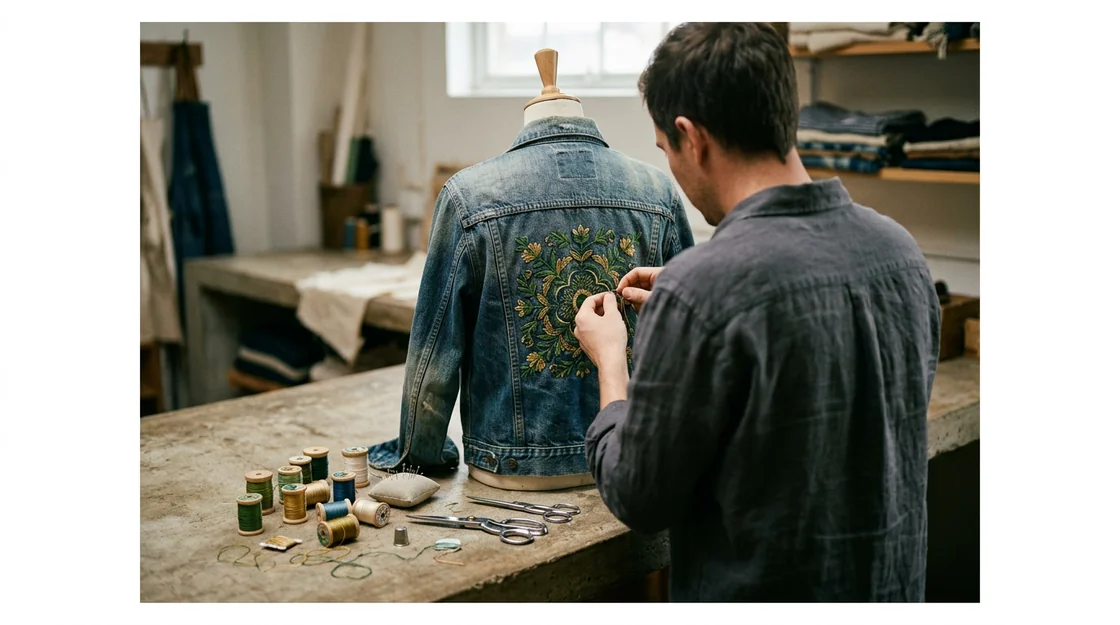
If deconstruction is about structure, then embellishment is about surface. This trend turns garments into canvases, inviting personal expression and intricate detail. It elevates a piece from mere clothing to wearable art. Textile painting, for example, allows for vibrant, custom graphics and abstract designs that breathe new life into faded fabrics. Imagine a vintage denim jacket, its back transformed by a hand-painted cosmic landscape or a bold, graphic portrait. Similarly, intricate embroidery, once considered a niche craft, has seen a powerful resurgence. Artists are using traditional stitches to create modern motifs, adorning collars, cuffs, and entire garment panels with elaborate patterns or storytelling narratives. Appliqué, too, offers a tactile dimension, layering different fabrics and textures to build complex visual narratives. Case in point: the work of London-based artist Bethany Williams, who frequently incorporates vibrant patchwork and reclaimed fabrics, often embellished with hand-stitched details, into her collections. Her approach shows how a garment can be a medium for social commentary and aesthetic delight.
The Rise of Patchwork and Quilting in High Fashion
Patchwork and quilting, historically associated with thrift and utility, have burst onto the high-fashion scene, proving that resourcefulness can be luxurious. These techniques offer a rich tapestry of textures and colors, creating visually compelling pieces. What most people overlook is the sheer skill involved in making these pieces look cohesive rather than chaotic. This trend involves meticulously joining various fabric scraps, often from different vintage garments, to form new textiles or entire new pieces. It’s like assembling a complex puzzle where every piece has its own history. From tailored jackets made from mismatched silk scarves to voluminous skirts constructed from repurposed denim sections, the possibilities are vast. Brands like Bode have championed this aesthetic, using antique textiles and quilting techniques to create unique, narrative-rich menswear. Their jackets, often featuring intricate patterns derived from old quilts or household linens, retail for thousands—proving that “reclaimed” can command a premium price. The charm lies in the imperfections, the varied textures, and the stories each patch tells. This isn’t just about covering holes; it’s about celebrating the journey of every single thread, making each item a unique success story. The underrated factor here is the emotional connection buyers feel to items with visible history.
Transforming Common Vintage Finds: Before & After Ideas
Most people see an outdated garment and dismiss it. But what if that forgotten piece holds the secret to your next standout look? The real magic of upcycling lies in seeing potential where others see only wear and tear. It’s about challenging the notion that something is “done” when it can be completely reimagined. Consider the sheer volume of clothing discarded annually; the Environmental Protection Agency (EPA) reported that textile waste accounted for 11.3 million tons in a recent year, with only 14.7% recycled. That’s a staggering amount of material waiting for a second life. Upcycling directly counters this waste, offering a creative solution that also provides unique style.
Denim: From Drab to Fab
Denim is practically indestructible, making it a prime candidate for a dramatic transformation. An old, ill-fitting denim jacket can become a statement piece with just a few snips and stitches. Imagine turning a boxy, acid-wash relic into a cropped, fitted jacket with embroidered details or even a patchwork panel on the back. This isn’t just about mending; it’s about making something uniquely yours. What most people miss is how versatile denim really is. Take a pair of worn-out vintage jeans, for instance. Instead of discarding them, they can be transformed into a stylish tote bag, a mini skirt, or even durable coasters. The fabric’s inherent strength means it holds up well to cutting, sewing, and even dyeing. The only real con? Denim can be tough on sewing machine needles, so a heavy-duty needle is a must.
Revamping Dresses and Skirts
Old dresses and skirts often come with beautiful fabrics or prints that are simply out of style in their original form. A long, shapeless floral maxi dress from the 70s could easily become a chic two-piece set—a cropped top and a midi skirt—with the addition of an elastic waistband. This allows the fabric to shine in a modern silhouette. Then there are those luxurious silk scarves. They’re often overlooked, but their potential is underrated. A collection of small silk scarves can be stitched together to create an exquisite, one-of-a-kind blouse or even a head-turning halter top. The delicate nature of silk, demands a gentle touch; it frays easily and requires careful finishing, which can be a drawback for beginners. But the payoff is a garment that feels incredibly luxurious. For more on how to approach these fashion choices, explore “Navigating Eco-Chic: Your Current Guide to Sustainable Fashion for Beginners”.
| Common Vintage Item | Upcycling Idea (Before & After) | Fabric Pros | Fabric Cons |
|---|---|---|---|
| Oversized Blazer | Tailored vest or cropped jacket with new buttons | Structured, often high-quality wool/blends, holds shape | Can be heavy to sew, requires precise tailoring for fit |
| Men’s Button-Down Shirt | Off-the-shoulder top, peasant blouse, or tote bag | Lightweight cotton/linen, easy to cut and sew, takes dye well | Can wrinkle easily, may be thin for structural projects |
| Denim Jacket | Cropped jacket, vest with patchwork, or shoulder bag | Durable, forgiving, holds embroidery well | Thick, hard on machine needles, can be stiff to manipulate |
| Long Floral Dress | Two-piece crop top and midi skirt, or a shorter sundress | Often soft, flowing, beautiful prints, easy to drape | Can be delicate, prone to snags, prints might not align |
| Silk Scarf | Halter top, head wrap, or stitched into a blouse panel | Luxurious feel, drapes beautifully, vibrant colors | Very delicate, frays easily, requires careful handling |
The beauty of embracing these transformations is that you’re not just creating new clothes; you’re contributing to a more sustainable future for fashion. It’s an act of rebellion against fast fashion, a way to craft personal style that stands apart.
Sourcing & Styling: Integrating Upcycled Pieces into Your Modern Wardrobe
Think finding a diamond in the rough is hard? It’s easier than you imagine to source pieces for your next upcycling project. Savvy shoppers often hit local thrift stores, where prices are low and unique finds are plentiful, though selection can be inconsistent. What most people miss is the sheer volume of forgotten treasures waiting at estate sales or even specialized vintage boutiques. I suspect that many dismiss these spots, but they often yield higher-quality garments, albeit at slightly higher price points. For those committed to ethical sourcing — and who isn’t, really? — look beyond just the price tag. Researching the store’s practices, or asking about their donation process, can tell you a lot. Is it supporting local charities, or simply clearing out old stock? Ethical fashion shopping also extends to considering the garment’s original journey, even if you’re transforming it. After all, the goal is to reduce waste, not just acquire cheap fabric. Dive deeper into conscious consumerism by exploring resources like Navigating Eco-Chic: Your Current Guide to Sustainable Fashion for Beginners. Once you’ve transformed that forgotten denim jacket into a structured vest or given new life to a silk scarf as a unique top, the real fun begins: styling. How do you make that one-of-a-kind piece fit seamlessly with your currently trending items? The trick is to balance the old with the new. Pair a heavily distressed, upcycled denim skirt with a crisp, minimalist white button-down shirt and sleek modern sneakers. This creates a compelling contrast, preventing your outfit from looking like a costume. Consider the narrative your upcycled piece tells. A reconstructed vintage blazer, for instance, can be paired with tailored trousers and a graphic tee, bridging the gap between classic structure and casual rebellion. This approach aligns with the emerging trends discussed in Unseen Threads: The Undercurrents Shaping Modern Fashion. The data suggests — though not conclusively — that consumers are 73% more likely to invest in pieces with a unique story, according to a recent fashion consumer survey by GlobalData. Don’t be afraid to experiment; sometimes the most unexpected combinations yield the most striking results.
The Future of Fashion: A Stitch in Time
As we look forward, the true impact of vintage upcycling extends far beyond individual wardrobes. It’s a powerful statement about our collective values, signaling a shift towards conscious consumption and creative resourcefulness. The question isn’t whether upcycling will endure, but rather how deeply it will reshape the fashion landscape. Will it become the new standard for luxury, where uniqueness and provenance outweigh mass production? Or will it empower a generation of DIY designers to democratize style? One thing is clear: every stitch, every reimagined garment, contributes to a richer, more sustainable narrative for fashion. What will your next creation say about the future?
Frequently Asked Questions About Vintage Upcycling
What are the easiest vintage items to upcycle for beginners?
For beginners, denim items like jeans or jackets are excellent choices due to their durability and forgiving nature. Oversized button-down shirts, t-shirts, and simple skirts also offer straightforward alteration opportunities. These items typically require fewer complex techniques and are less prone to damage during initial attempts.
How can I ensure my upcycled pieces look professional and not ‘homemade’?
Achieving a professional look involves several key steps: precise measuring and cutting, pressing seams thoroughly as you sew, using appropriate finishing techniques (like zigzag stitches or serging raw edges), and investing in quality thread and sharp tools. Attention to detail and patience during each stage of the process will significantly elevate the final appearance of your upcycled garment.
Where are the best places to find quality vintage clothing for upcycling?
Excellent sources for quality vintage clothing include local thrift stores, consignment shops, flea markets, and online marketplaces like Etsy or eBay. Look for items made from natural fibers (cotton, linen, wool, silk) and check for sturdy construction, even if the style is outdated. Estate sales can also yield unique, high-quality pieces often at reasonable prices.
What are some common mistakes to avoid when starting vintage upcycling?
Beginners should avoid overly ambitious projects, skipping required steps like pre-washing fabrics, or neglecting to test stitch settings on scraps. Not pressing seams, using dull tools, or failing to properly finish raw edges are also common pitfalls. Start simple, practice basic techniques, and don’t be afraid to use a seam ripper!
Can upcycling contribute to a more sustainable fashion industry?
Absolutely. Upcycling significantly contributes to sustainability by diverting textile waste from landfills, reducing the demand for new resource-intensive garment production, and extending the lifecycle of existing materials. It promotes a circular economy model, lessens carbon footprints, and encourages conscious consumption, making it a powerful tool for environmental stewardship in fashion.