Anúncios
Are you feeling overwhelmed by the endless scroll of fashion trends? One minute, it’s all about minimalist chic; the next, a riot of clashing patterns dominates your feed. The rapid-fire nature of social media has accelerated the trend cycle to a dizzying pace, making it feel impossible to keep up, let alone cultivate a sense of personal style. This constant pressure to adapt leaves many feeling like they’re perpetually one step behind, chasing fads that feel outdated almost as soon as they arrive.
This feeling isn’t just in your head; it reflects a core transformation in the fashion industry. The old top-down model, where a handful of elite designers dictated what was fashionable, has given way to a more democratized and complex ecosystem. Today, style is a dynamic conversation influenced by street style, technological innovation, a growing demand for sustainability, and a powerful push for social inclusivity. These forces are not just creating new looks; they are rewriting the very rules of how we produce, consume, and relate to our clothing.
Anúncios
This article serves as your guide to navigating this exciting and evolving landscape. We will decode the dominant aesthetics shaping today’s runways and streets, from the understated appeal of quiet luxury to the bold expression of maximalism. We’ll explore the groundbreaking materials and circular models defining the next chapter of sustainable fashion, examine how technology like AI is personalizing our shopping experiences, and discuss the critical shift towards gender-fluid and size-inclusive collections. It’s time to move beyond the noise and build a wardrobe that is both current and timeless.
Redefining ‘Chic’: The New Aesthetics Dominating Runways and Streets
The old, top-down rules of fashion have started to crumble. For decades, a handful of designers dictated what was “in,” but that era is fading. Now, style is less like a single-menu restaurant and more like a sprawling food court with endless options. This shift has given rise to several distinct aesthetics that coexist, allowing for historic personal expression.
Anúncios
Three dominant themes have emerged from this new landscape: quiet luxury, eclectic maximalism, and utilitarian chic. Each offers a completely different approach to getting dressed, yet they all share space on runways and social media feeds. The underrated factor here is that you no longer have to pick just one lane. Style has become fluid.
From Quiet Luxury to Eclectic Maximalism: A Spectrum of Style
At one end of the spectrum sits quiet luxury, a philosophy centered on impeccable craftsmanship and high-quality materials without the need for flashy logos. Think perfectly tailored trousers, unbranded cashmere sweaters, and structured leather totes. The focus is on silhouette and texture, creating an air of understated confidence. This approach is all about investing in timeless pieces that form the core of a well-curated closet, a key principle in Building a Capsule Wardrobe.
But what if minimalism just isn’t your thing? On the complete opposite end, eclectic maximalism celebrates a “more is more” attitude. This aesthetic is a joyful collision of bold patterns, vibrant colors, and diverse textures. According to a recent analysis by WGSN, a leading trend forecasting agency, outfits featuring three or more clashing patterns saw a 28% increase in engagement on street style platforms. It’s about layering sequins with plaid or pairing vintage florals with animal prints — a chaotic but curated look where smart Accessorizing for Different Occasions can make all the difference.
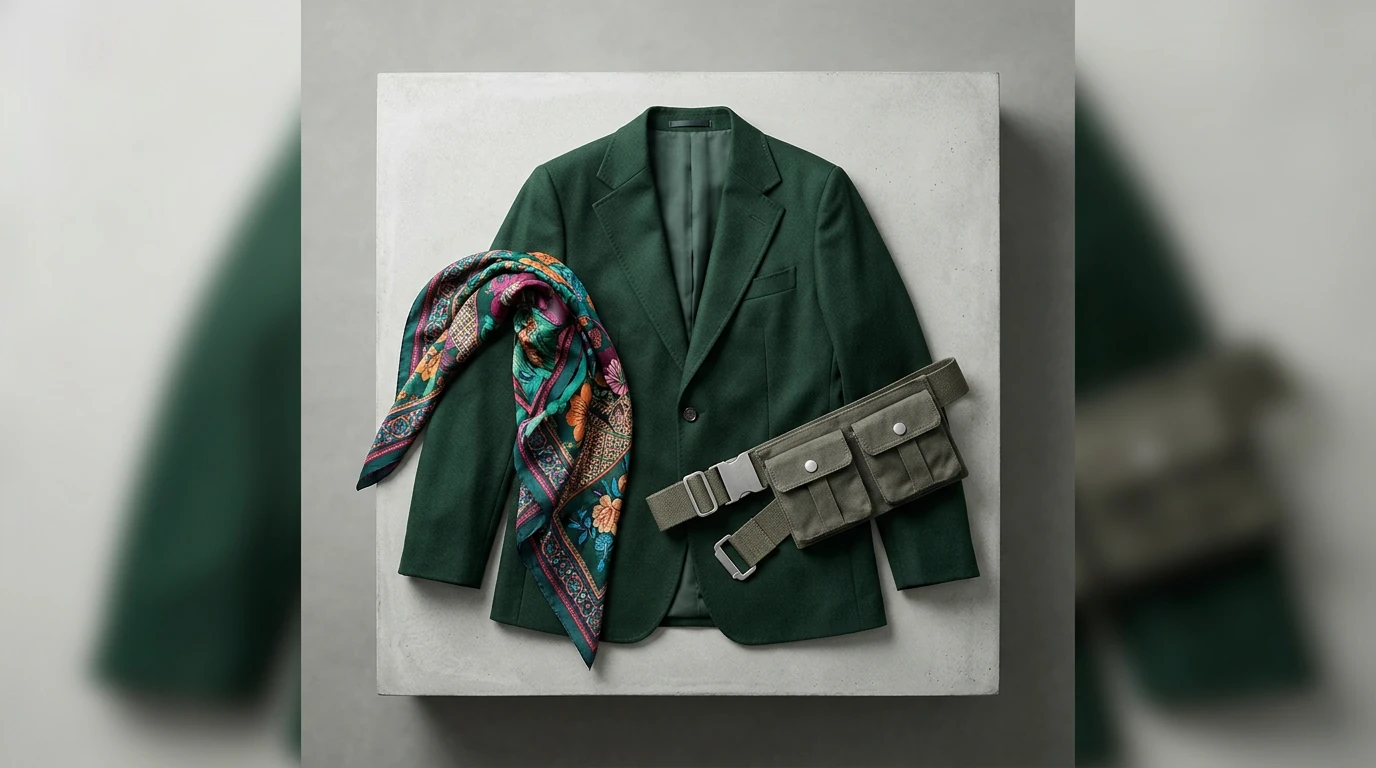
Somewhere in the middle, utilitarian chic merges practicality with high fashion. This trend pulls inspiration from workwear and outdoor gear, prioritizing function without sacrificing style. We see this in the rise of technical fabrics, cargo pants paired with heels, and multi-pocketed vests layered over dresses. It’s a direct response to a need for clothing that performs in the real world (and let’s be honest, it’s incredibly comfortable). This movement is less about fleeting trends and more about embracing clothes that are built to last.
Sustainable Fashion’s Next Chapter: Innovation in Materials and Production
For a long time, the conversation around sustainable fashion felt limited to organic cotton and recycled polyester. While those are important steps, the industry is now pushing into genuinely new territory. The focus has shifted from simply using “better” materials to completely rethinking how clothing is made, used, and ultimately disposed of. It’s a core change in design philosophy.
This movement isn’t just a niche concern anymore. A study by the Boston Consulting Group found that 73% of consumers view sustainability as a key purchasing factor. Brands are responding with breakthroughs in both materials science and manufacturing logic, creating a new playbook for eco-conscious style.
Beyond Organic Cotton: Emerging Sustainable Fabrics
The material revolution is perhaps the most exciting part of this next chapter. Scientists and designers are collaborating to create fabrics from sources that sound more like they belong in a biology lab than a design studio. We’re seeing the rise of materials like Mylo™, a leather alternative grown from mycelium—the root structure of mushrooms—and it’s surprisingly supple and durable.
Recycled synthetics are also getting a major upgrade. Instead of just melting down plastic bottles, companies like Aquafil are regenerating nylon waste from fishing nets and old carpets into ECONYL® yarn. This process creates a high-quality material with a fraction of the environmental impact. What most people miss is how these new fabrics are not just about being “less bad,” but about creating textiles with unique properties and textures that designers are eager to explore.
The difference in environmental cost is stark.
- Conventional Cotton: Requires approximately 2,700 liters of water per t-shirt. Often involves heavy pesticide use.
- Mushroom Leather (Mycelium): Grown in a lab using agricultural waste with significantly less water and land. It is also biodegradable.
- Virgin Polyester: A petroleum-based product with high carbon emissions during production. Sheds microplastics.
- Recycled Nylon (ECONYL®): Reduces the global warming impact of nylon by up to 90% compared to virgin material, according to its manufacturer.
Circular Fashion: Designing for Longevity and Regeneration
Beyond materials, a bigger idea is taking hold: circular fashion. This approach treats clothing not as a disposable item but as a resource that should remain in use for as long as possible. Think of it like a community garden share; the goal is to keep the resources in a closed loop, rather than constantly buying new seeds and throwing away the old plants. It’s a direct challenge to the “take-make-waste” model of fast fashion.
This means designing clothes from the outset to be durable, repairable, and eventually, recyclable. Brands are implementing take-back programs, where customers can return old garments for store credit, ensuring the materials are properly repurposed. On-demand manufacturing is another key component, where items are produced only after an order is placed, eliminating the massive waste from overproduction that plagues the industry.
Upcycling and Repurposing: Creative Approaches
A specific and creative part of the circular model is upcycling. This isn’t just DIY craft; it’s high design. Brands like Bode have built their entire aesthetic around quilting and repurposing antique textiles into one-of-a-kind menswear pieces. Other companies focus on deconstructing post-consumer waste—like old denim jeans—and re-weaving them into entirely new rolls of fabric, ready for a second life.
Ethical Production: Transparency from Farm to Wardrobe
The underrated factor in sustainability is often the human one. True progress requires ethical production, which means ensuring fair wages, safe working conditions, and transparency throughout the supply chain. Consumers are demanding to know who made their clothes and under what conditions. How can you be sure a brand’s claims are legitimate?
Technology is providing some answers. Some companies are using blockchain to create a digital ledger that tracks a garment from the farm where the fiber was grown to the factory where it was stitched. As Dr. Anya Sharma, a supply chain ethicist, explains, “Immutable transparency builds trust. When a consumer can scan a QR code and see the journey of their shirt, it changes their relationship with the product.” This level of detail empowers consumers to support the ethical brands to watch and make informed choices, which is a core principle when learning how to build a capsule wardrobe.
This push for accountability is forcing the industry to confront long-standing issues, moving sustainability from a marketing buzzword to a measurable standard of operation.
Immutable transparency builds trust. When a consumer can scan a QR code and see the journey of their shirt, it changes their relationship with the product.
— Dr. Anya Sharma, Supply Chain Ethicist
| Core Concept | Key Developments & Ideas |
|---|---|
| Dominant Aesthetics | A spectrum of coexisting styles, including the understated elegance of ‘quiet luxury’, the bold expression of ‘eclectic maximalism’, and the functional style of ‘utilitarian chic’. |
| Sustainable Fashion | Moving beyond basic recycling to innovative materials like mushroom leather (Mylo™) and regenerated nylon (ECONYL®), alongside a push for circular models and supply chain transparency. |
| Fashion Technology | The integration of AI for personalized recommendations, augmented reality for virtual try-ons, and the emergence of digital-only fashion for avatars in the metaverse. |
| Inclusivity & Fluidity | The rise of gender-neutral collections that prioritize silhouette over gender, coupled with a strong market demand for inclusive sizing that caters to all body types. |
| Wardrobe Strategy | A shift away from fast fashion towards building intentional wardrobes with a focus on quality over quantity, personal style identification, and the ‘cost per wear’ metric. |
The Digital Thread: How Technology is Reshaping Fashion Experiences
Beyond online shopping carts, technology is fundamentally altering how we interact with clothing. The integration of fashion technology is no longer a distant concept but an active force changing everything from design studios to our personal closets. It’s a quiet revolution.
Artificial intelligence, for instance, is powering a new level of AI-driven personalization. Algorithms now analyze your past purchases and browsing history to curate recommendations that feel almost psychic. According to a Business of Fashion analysis, brands using this type of AI have seen up to a 23% increase in customer retention. How much of your current wishlist was suggested to you by a machine?
The experience is also becoming more immersive with tools like virtual try-on, which lets you see how a garment fits without stepping into a store. This technology uses augmented reality to overlay clothing onto your live image—making online shopping feel less like a gamble. This shift extends into purely digital realms with the rise of metaverse fashion, where digital-only outfits are sold for avatars.
What most people miss is how these tools are also reshaping the design process itself. Designers are using AI to predict trends and generate new patterns, creating a feedback loop between consumer data and creation that will likely define the next decade of style.
Gender Fluidity and Inclusivity: Breaking Down Traditional Boundaries
The rigid lines that once defined fashion are becoming increasingly blurred. Driven by social media conversations and the expectations of a new generation of consumers, the industry is undergoing a underlying shift toward greater inclusivity. According to a McKinsey report, 68% of Gen Z consumers state they are more likely to buy from companies that champion diversity and inclusion. This is no longer a niche conversation. It’s a powerful market force demanding change.
Beyond Binary: The Rise of Gender-Agnostic Collections
Forward-thinking designers are dismantling the traditional menswear and womenswear divide, opting instead for gender-neutral fashion. Labels like Telfar and Harris Reed create pieces that prioritize silhouette, texture, and personal expression over prescribed gender roles. This approach reframes clothing as a tool for identity, which aligns with the core principles of Building a Capsule Wardrobe, where individual style and versatility are key.
It’s about making clothes for people, period.
This movement is more than just androgyny; it’s about providing an unrestricted menu of options. Think of it like a chef having access to every ingredient in the kitchen, not just those designated for a specific type of cuisine. The result is a richer and more creative expression of style, allowing individuals to mix and match pieces based on what feels authentic to them—a surprisingly simple concept that has taken fashion a long time to adopt.
Sizing for Every Body: The Push for True Inclusivity
Alongside gender expression, the push for inclusive sizing is reshaping retail. For too long, the industry has catered to a narrow range of body types, alienating a significant portion of its potential customer base. What most people miss is that this isn’t just a cultural oversight; it’s a major commercial blind spot. Data from Plunkett Research values the plus-size apparel market at over $24 billion, a figure that highlights a massive, underserved demographic.
Brands like Universal Standard, with its groundbreaking 00-40 size range, and Savage X Fenty have proven that there is a strong demand for fashion that fits. The success of Savage X Fenty’s campaigns, which feature an authentic spectrum of bodies, serves as a powerful case study in how representation directly fuels brand loyalty and commercial growth. Is it really that hard to see why this works?
The operational challenges of producing a wider size range—from pattern grading to inventory management—are significant, especially for smaller brands. as consumer demand for body positivity in fashion intensifies, the pressure to find solutions and cater to every body will only continue to mount.
Investing in Your Wardrobe: Navigating Longevity and Value in Modern Fashion
As conversations around inclusivity reshape fashion, another significant shift is happening in our closets: a move towards intentionality. The relentless cycle of micro-trends is exhausting, not to mention expensive. Consumers are now looking for ways to build a wardrobe that lasts, focusing on personal style over fleeting fads. This is about making smarter, more sustainable choices without sacrificing an ounce of style.
The Art of the Intentional Wardrobe: Quality Over Quantity
The core idea is simple yet powerful: buy fewer, better things. An intentional wardrobe is built on a foundation of high-quality, versatile pieces that you genuinely love to wear. Think of it like stocking your pantry; you need the necessary, high-quality ingredients like olive oil and spices before you start buying niche, single-use items. This approach directly counters the fast-fashion model that encourages disposability.
The data backs up this change in mindset. A report from the Geneva Environment Network found that the average consumer buys 60% more clothing than they did 15 years ago, but each item is kept for only half as long. Investing in well-made garments breaks this cycle. It means choosing a classic wool coat that will see you through a decade of winters over a trendy puffer jacket that feels dated by next season.
Identifying Your Core Style
Before you can invest wisely, you need to know what you’re investing in. What is your personal style DNA? Understanding your core aesthetic—be it minimalist, bohemian, classic, or eclectic—is the single most important step in avoiding purchase regret. Take a look at your existing wardrobe. What are the pieces you reach for again and again?
This isn’t about boxing yourself in. It’s about creating a reliable base that you can build upon. Knowing you gravitate towards neutral tones and clean lines, for example, helps you filter out the noise of a thousand brightly colored, ruffled blouses vying for your attention. A strong sense of self is your best defense against impulse buys.
Decoding Value: Beyond the Price Tag
A higher price tag doesn’t always equal better value, but a suspiciously low one is often a red flag for poor quality. The underrated factor here is understanding the concept of cost per wear. It’s a simple calculation that reframes how we think about affordability. A $40 fast-fashion top worn twice before it loses its shape or goes out of style is actually more “expensive” than a $200 classic silk blouse worn 50 times over five years.
That one shift in perspective changes everything.
Calculating Cost Per Wear
The formula is straightforward: Total Cost of the Item ÷ Number of Times You’ll Wear It. For example, a $350 pair of well-made leather boots that you wear 100 times over several years has a cost per wear of just $3.50. In contrast, a $50 pair of trendy heels worn for a single event has a cost per wear of $50. Suddenly, the “investment” piece looks like the much smarter financial decision.
Practical Steps for Building a Lasting Collection
Creating a wardrobe with longevity requires a mindful approach to shopping. It’s less about hunting for bargains and more about acting as a curator for your own collection. Before adding a new piece, run it through a mental checklist to assess its true potential. We’ve all been there—buying something on a whim only to have it gather dust.
Here are a few key points to consider when evaluating a potential purchase:
- Material & Construction: Check the fabric content. Natural fibers like wool, cotton, silk, and linen tend to last longer and wear better than many synthetics. Look at the seams and stitching—are they tight and secure? A well-constructed garment is a sign of fashion longevity.
- Versatility: Can you think of at least three different outfits you can create with this item using pieces you already own? A versatile piece works for multiple settings, which is a core principle of Building a Capsule Wardrobe. Its utility can often be expanded through smart styling and Accessorizing for Different Occasions.
- Fit & Comfort: Does it fit you perfectly right now, without needing major alterations? If it’s not comfortable, you simply won’t wear it, no matter how beautiful it is.
- Care Instructions: Be realistic. If an item is “dry clean only” and you know you’ll never take it to the cleaners, it’s not a practical investment for your lifestyle.
By shifting from a consumer to a curator, you not only save money in the long run but also build a wardrobe that is a more authentic and sustainable reflection of your personal style.
The Influence of Social Media: Micro-Trends and Viral Moments
Platforms like TikTok and Instagram have completely rewritten the rules of fashion cycles. Instead of seasonal collections from major houses dictating what’s in, we now see micro-trends emerge almost overnight, driven entirely by user-generated content and influencers. These trends are fashion’s version of a flash mob—suddenly everywhere, and then gone just as quickly. They are fast and fleeting.
This acceleration is staggering. A report from the Digital Marketing Institute recently found that the lifespan of a viral fashion item on TikTok can be as short as three weeks before audience fatigue sets in. But how does a random sweater suddenly become the centerpiece of viral fashion? The algorithm plays a huge part, creating a powerful feedback loop where popular content gets shown to more people, reinforcing the trend’s visibility until it hits a saturation point.
What most people miss is the core shift in authority. The influencer impact is no longer just about A-list celebrities; it’s about relatable creators showcasing a “get the look” video that gets 3.7 million views. This peer-to-peer recommendation often feels more authentic to users than a high-gloss magazine advertisement—it’s like getting style advice from a friend.
This rapid cycle of social media fashion presents a new challenge for the conscious consumer. The real skill is learning to engage with these fun, fleeting moments—perhaps through smart accessorizing for different occasions—without feeling pressured to overhaul your entire look every other week.
Beyond the Trend Cycle: What’s Next for Your Wardrobe?
As the lines between technology, sustainability, and personal identity continue to blur, the very definition of a ‘valuable’ garment is up for debate. Is it the piece with the lowest cost-per-wear, the one with a transparent, ethical supply chain, or the digital twin that exists only in the metaverse? The future of fashion doesn’t seem to lie in a single, overarching trend but in the conscious curation of a personal style system that reflects our individual values.
Ultimately, the most significant shift isn’t happening on the runway, but in our own closets. The real challenge moving forward is not to predict the next big thing, but to answer a more personal question: What story do you want your clothes to tell about you and the world you want to live in?
Frequently Asked Questions
What are the biggest current fashion trends?
The current landscape features several coexisting aesthetics rather than one single trend. Key styles include ‘quiet luxury,’ which focuses on high-quality, unbranded pieces; ‘eclectic maximalism,’ celebrating bold patterns and colors; and ‘utilitarian chic,’ which merges practical, workwear-inspired elements with high fashion.
How is sustainable fashion evolving?
Sustainable fashion has moved beyond just organic cotton. The industry is now innovating with advanced materials like mushroom-based leather and regenerated nylon from ocean waste. There is also a major focus on circular fashion, which involves designing clothes for longevity, repairability, and implementing take-back programs.
What role does technology play in modern fashion?
Technology is reshaping the entire fashion experience. AI algorithms provide hyper-personalized shopping recommendations, while augmented reality powers virtual try-on tools. technology is creating entirely new markets, such as digital-only outfits for avatars in the metaverse.
How can I build a timeless wardrobe amidst fast trends?
To build a timeless wardrobe, focus on quality over quantity and identify your core personal style. This helps you filter out fleeting trends. A useful mindset is to calculate the ‘cost per wear’ of an item, prioritizing durable, versatile pieces that you will wear for years over cheap, disposable fast fashion.
Where can I find gender-neutral fashion options?
Many forward-thinking designers and brands are now offering gender-agnostic or unisex collections. These can be found by searching for labels known for breaking traditional boundaries, such as Telfar or Harris Reed, and by exploring collections from mainstream brands that are increasingly launching gender-neutral lines focused on versatile silhouettes.